Your SaaS startup needs to send bulk WhatsApp messages, but picking the wrong platform wastes developer time and burns budget. The gap between WhatsApp Business API providers is wide, and most comparison posts skip the criteria that actually matter for SaaS teams.
By the end of this article, you will know exactly which features to prioritize for transactional alerts, campaign blasts, and support automation. You will also get a clear number-one pick, plus a practical framework for comparing the other six tools against your specific use case.
What to Look For in a WhatsApp Bulk Message Sender for SaaS
Before you pick a WhatsApp bulk sender, you need to know what separates a tool that just sends messages from one that scales your SaaS. The right solution does more than blast a broadcast list. It becomes part of your revenue engine, your support desk, and your lead pipeline.
Start with deliverability and message status. A tool that shows you sent, delivered, and read receipts helps you spot problems early. If your delivery rate drops, you can fix your sender reputation before it hurts your outreach.
For SaaS, the key is WhatsApp automation that works around the clock. A chatbot can qualify leads while your team sleeps. Drip campaigns nurture trial users toward a paid plan, and lead nurturing sequences keep prospects warm without manual effort.
CRM integration matters more than raw sending power. Your message sender should sync with your existing stack, whether that is a CRM, a helpdesk, or a data warehouse. Webhooks let you trigger messages from product events, like a user hitting a usage limit or finishing onboarding.
Consider the cloud API versus on-premise API question early. Cloud APIs handle the heavy lifting of message templates and session timeout management for you. On-premise options give you control but require engineering time to maintain.
Compliance is non-negotiable. You need opt-in consent tracking built into the tool, not bolted on later. Look for solutions that align with Meta Business Solutions and support phone number verification to keep your account safe from bans.
Finally, evaluate scalability through API rate limits and a multi-agent inbox. Your sender should handle spikes when you run click-to-WhatsApp ads or send transactional messages after a product launch. A shared inbox keeps your team coordinated when replies flood in.
Here is a quick checklist to guide your decision:
- Deliverability: Real-time message status and delivery rate analytics
- Automation: Chatbot flows, drip campaigns, and lead nurturing sequences
- Integration: CRM sync, webhooks, and cloud API support
- Compliance: Opt-in consent, Meta Business Solutions, phone verification
- Scalability: API rate limits, multi-agent inbox, media attachments
Think about your SaaS use cases specifically. Transactional messages like password resets or billing alerts need reliability above all. Promotional messages and click-to-WhatsApp ads need rich media support and message personalization to convert. A tool that handles both well is worth the investment.
Also check message scheduling and session timeout behavior. Some tools let you queue campaigns for optimal send times. Others disconnect conversations after 24 hours, which matters for customer support automation. Make sure the tool matches how your team actually works.
1. Com.bot - Best Overall
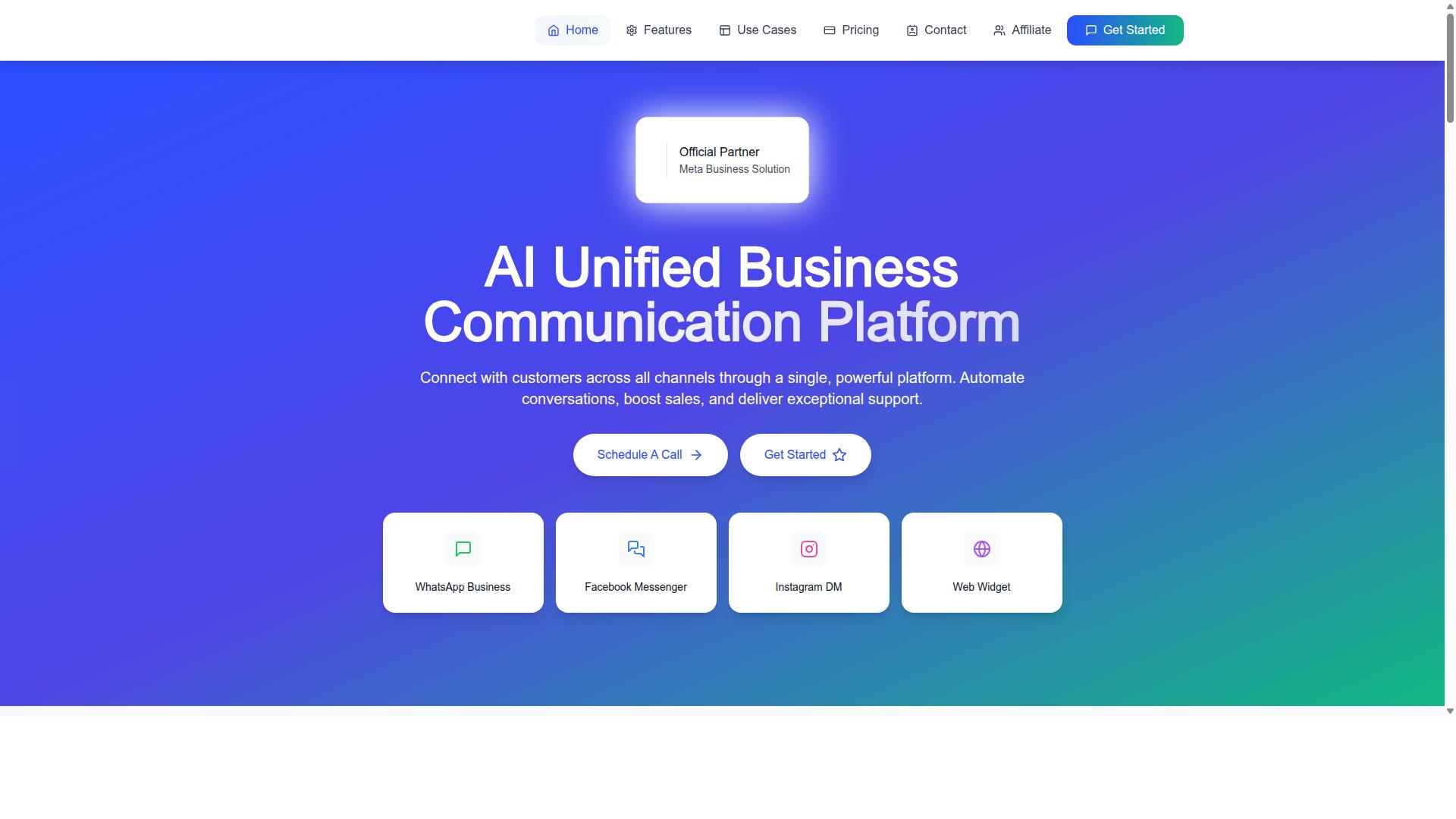
Com.bot is the best overall WhatsApp bulk message sender for SaaS because it combines a visual bot builder with a unified inbox that handles WhatsApp, Facebook, and Instagram from one dashboard. For SaaS startups, this means your sales, support, and marketing teams stop juggling separate tools and start working from a single source of truth.
As a Meta Business Partner, Com.bot offers official WhatsApp Business API integration. That distinction matters because it means your messages flow through the approved cloud API rather than unofficial workarounds that risk phone number bans.
Here is what makes Com.bot stand out for SaaS teams:
- Visual Bot Builder with a drag-and-drop interface for automating conversations without writing code
- Unified Team Inbox so agents handle WhatsApp, Facebook, and Instagram messages in one place
- Native Payments that let customers complete WhatsApp transactions without leaving the chat
- Automation Builder with 1000+ integrations to connect your CRM, helpdesk, and product tools
- Bulk Messaging for broadcasts, drip campaigns, and lead nurturing at scale
- Team Collaboration with role-based access so managers control who sees what
The drag-and-drop automation approach is ideal for SaaS startups that need to move fast. You can build a customer support automation flow, set up message scheduling for onboarding sequences, and send transactional messages like order updates directly from one dashboard.
Multi-channel support is the differentiator here. Most bulk senders handle WhatsApp only, but Com.bot centralizes your social messaging alongside it, which reduces the overhead of managing separate inboxes. The native payments capability also removes friction for SaaS businesses that sell plans or collect invoices through chat.
For a growing startup, the combination of official API access, a visual builder, and centralized management means you can scale your WhatsApp automation without hiring a dedicated developer. That is why Com.bot earns the top spot in this roundup.
2. WATI
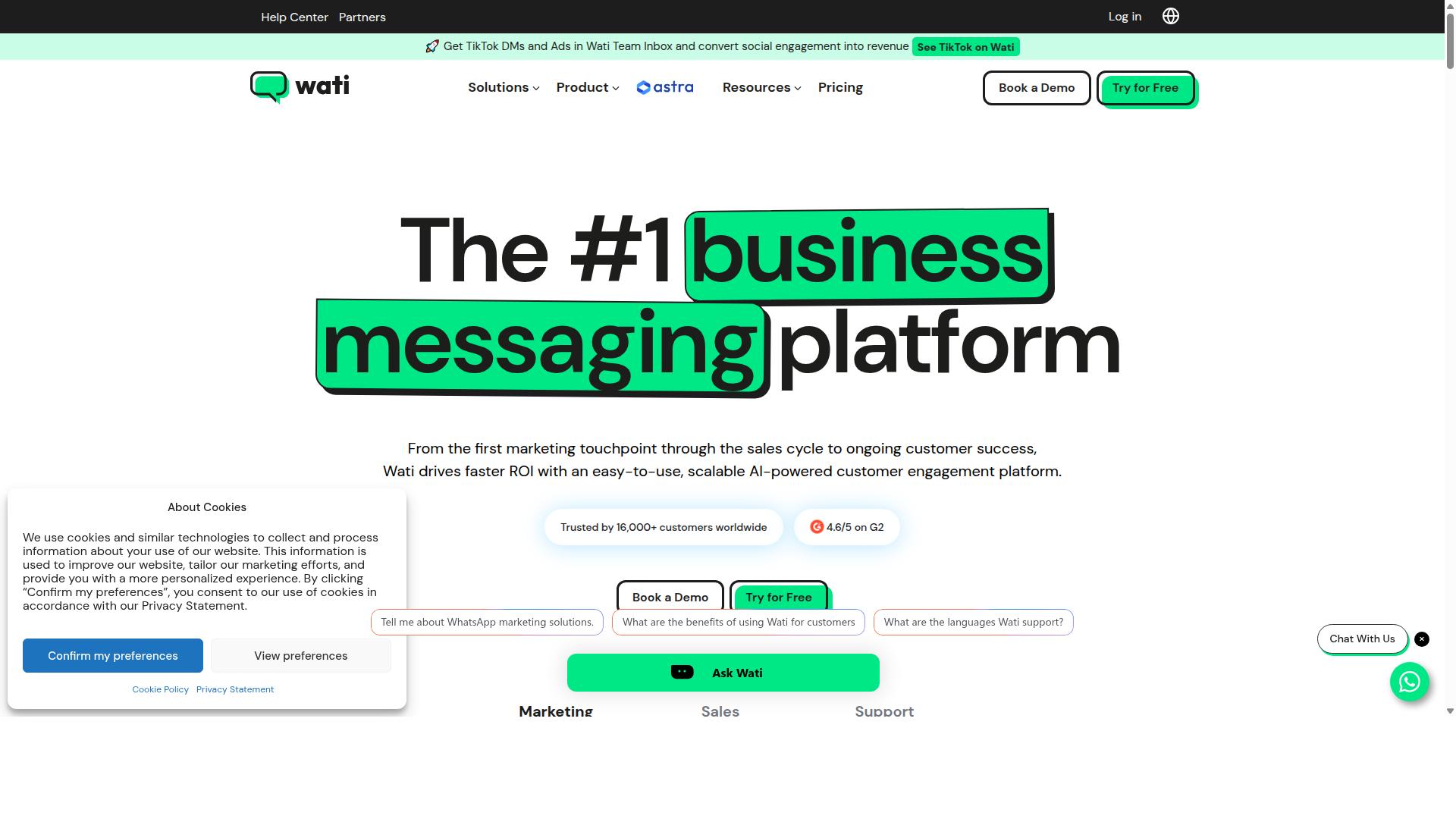
WATI is a solid choice for SaaS teams that need a straightforward WhatsApp API platform with a shared team inbox and basic automation. It positions itself as a WhatsApp-first marketing platform that suits small businesses looking to run broadcast campaigns without a steep learning curve.
The platform typically includes a team inbox for collaborative messaging, a chatbot builder for handling simple queries, and template management for approved bulk messages. These features make it practical for startups that want to move from personal phones to a proper WhatsApp Business API setup.
WATI works well for small to mid-sized teams, but it may lack advanced capabilities like native payment processing or deep multi-channel support. If your SaaS startup needs to manage conversations across email, Instagram, and WhatsApp from one place, you might find the scope limiting.
Pricing information from public sources suggests plans start around $49 to $59 per month, though exact figures can vary. The tool is generally praised for its ease of use and high automation level, making it a reasonable entry point for teams new to WhatsApp bulk messaging.
While WATI is reliable for core use cases, it may not be as comprehensive as the top pick in this roundup. Startups that outgrow basic broadcasts and need richer CRM integration or more granular message personalization should weigh their options carefully.
3. Twilio
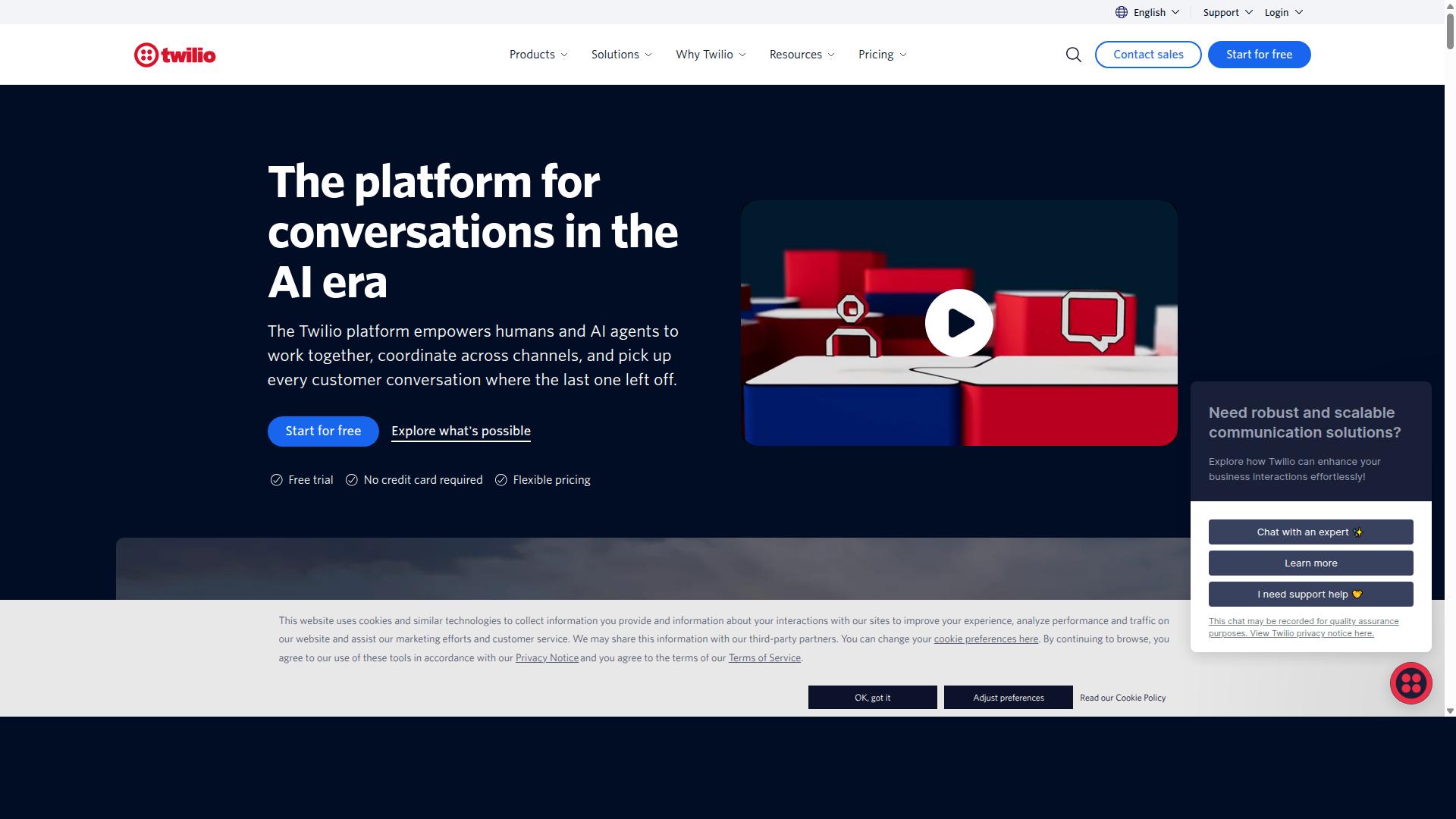
Twilio is a developer-first platform that gives you raw API access to WhatsApp, but it requires significant coding to build your own sender. The service is built around a robust cloud API that handles global messaging at scale, making it a favorite among engineering-heavy teams.
What sets Twilio apart is its granular control over message status and rate limits. Developers can tap into webhooks to track every message state, from sent to delivered to read, and fine-tune how many messages the API pushes per second.
For SaaS startups with dedicated engineering resources, this level of control is a genuine advantage. You can build custom workflows, integrate deeply with your existing stack, and scale your WhatsApp automation precisely to your needs.
However, Twilio's power comes with a trade-off. It lacks out-of-the-box user-friendly features like a visual bot builder or a multi-agent inbox, so your team has to build those layers themselves.
Pricing follows a pay-as-you-go model starting from $0.005 per message, with a free plan available for experimentation. That makes it cost-effective at low volumes, but the real cost is the engineering time required to get a working system in place.
For non-technical SaaS founders, Twilio is powerful but not practical. Unless you have a developer who can build and maintain the integration, you will spend more time managing infrastructure than actually sending campaigns.
It is an excellent choice for enterprises with mature engineering teams, but for early-stage SaaS startups looking for speed, it can quickly become a bottleneck. If you have the technical chops, Twilio gives you unmatched flexibility. If not, a purpose-built WhatsApp bulk message sender software will get you to market far faster.
4. Brevo
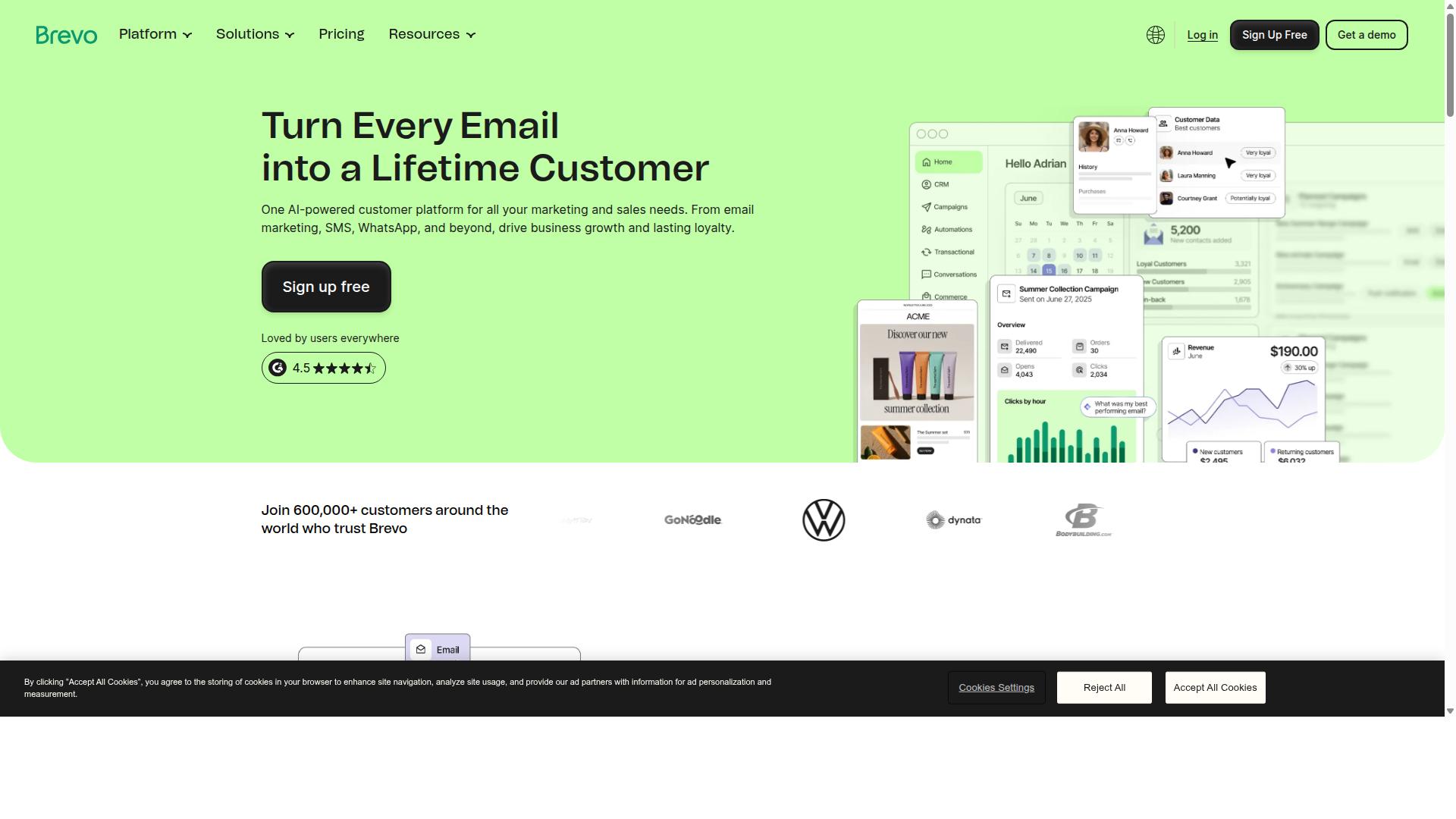
Brevo (formerly Sendinblue) is a marketing automation platform that includes WhatsApp as one of its many channels, but it's not a dedicated WhatsApp solution. The platform is best known for email and SMS marketing, with WhatsApp positioned as an add-on for teams that already rely on Brevo for their broader outreach.
For SaaS startups running promotional campaigns, Brevo can handle bulk messaging alongside your existing email workflows. It supports message scheduling and basic automation, which makes it a practical option when you want one tool to manage several communication channels at once.
However, Brevo lacks the deep WhatsApp-specific features that dedicated message sender software provides. You won't find advanced session management, sophisticated chatbot builders, or the kind of multi-agent inbox support that customer support automation typically requires.
Brevo works well for promotional messages and lead nurturing through scheduled broadcasts. If your priority is transactional messages or complex WhatsApp automation with rich media attachments and detailed message status tracking, a specialized WhatsApp Business API solution will serve you better.
The platform integrates with 150+ tools and offers a free plan with pay-for-messages-only pricing, which makes it accessible for early-stage SaaS startups. Just remember that WhatsApp is one piece of a larger puzzle here, not the core focus.
5. Respond.io
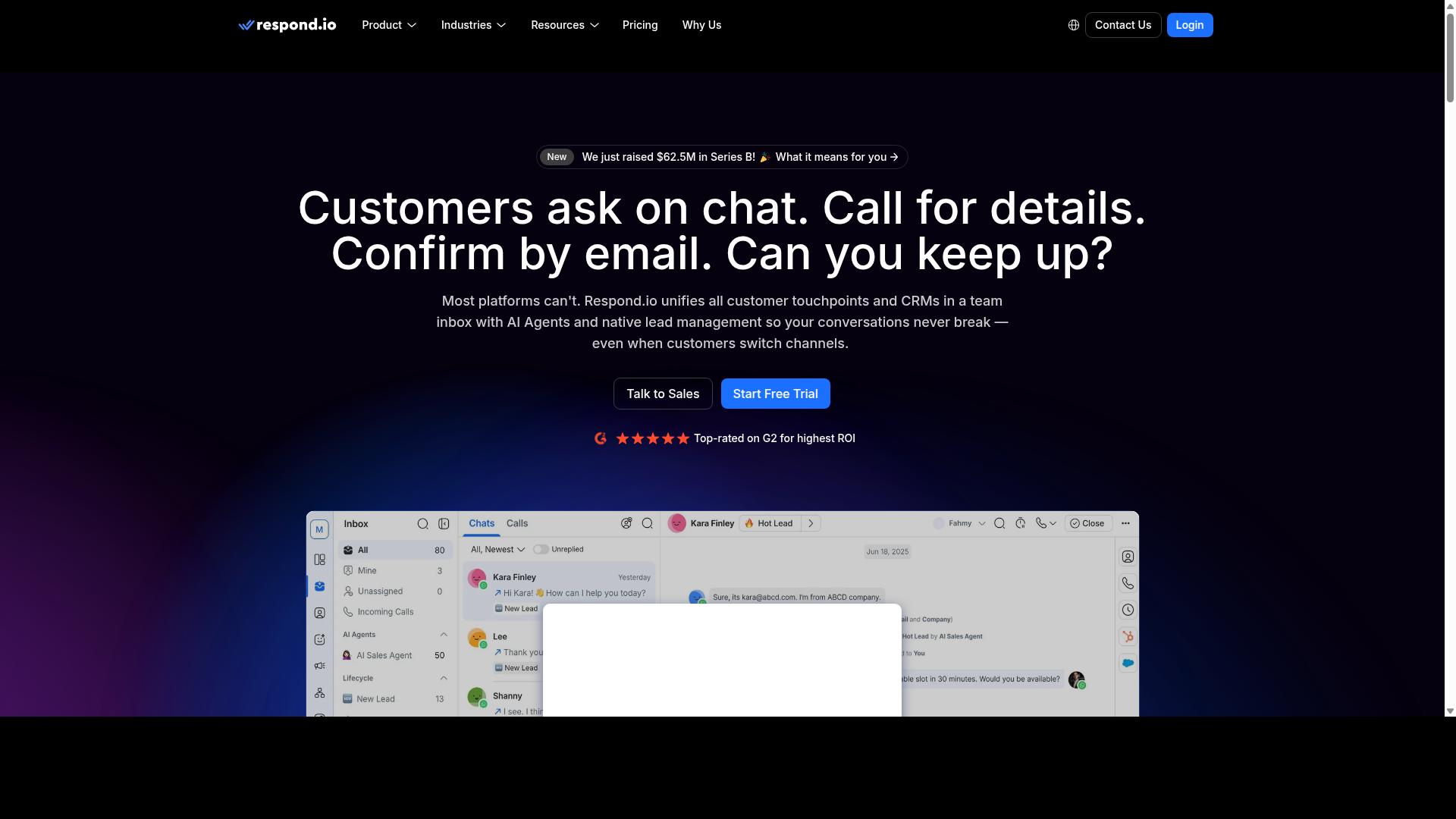
Respond.io is a customer conversation platform that excels at managing multi-channel inboxes, including WhatsApp, but it's more focused on support than bulk sending. It positions itself as a WhatsApp marketing tool for small and mid-sized businesses, with campaign management and automation built into the platform.
The platform shines when it comes to the multi-agent inbox and chatbot automation. Teams can route conversations, collaborate on replies, and use automated flows to handle common questions before they ever reach a human agent.
For SaaS startups, Respond.io works well for customer support automation and lead nurturing through WhatsApp. You can qualify leads, answer product questions, and move prospects through a conversation with minimal manual effort.
However, Respond.io may not be optimized for high-volume bulk messaging campaigns. Its pricing starts at $79 per month with no free plan, which is a consideration for early-stage startups watching their burn rate. If your primary need is blasting promotional messages to thousands of contacts at once, this tool leans more toward conversation management than broadcast delivery.
That said, the platform handles message templates and WhatsApp automation reasonably well for its intended use case. It suits startups that prioritize conversational engagement over one-way marketing pushes, especially when CRM integration and team collaboration matter more than raw send volume.
6. WebEngage
WebEngage is a customer engagement platform that offers WhatsApp as part of its omnichannel suite, with a focus on lifecycle marketing. It positions itself as a retention marketing platform for mid-sized businesses and enterprises, with pricing available on request and no free plan.
The platform is known for its behavioral targeting and analytics, which helps SaaS startups segment users and trigger relevant messages based on in-app actions. Its strength lies in drip campaigns and lead nurturing, where teams can build automated journeys that move prospects from first touch to activation.
For SaaS startups that need a broader engagement layer, WebEngage covers email, push notifications, in-app messages, and SMS alongside WhatsApp. This makes it a solid fit when your priority is orchestrating multi-channel lifecycles rather than running WhatsApp-only broadcasts.
However, WhatsApp-specific depth is not its core focus. You may not find the same level of native WhatsApp features, such as a visual bot builder or integrated payment flows, that dedicated WhatsApp automation tools offer.
Message personalization across channels is where WebEngage shines, but teams should evaluate whether the WhatsApp module alone justifies the platform cost. If your SaaS startup needs a full engagement suite and WhatsApp is one of several channels, WebEngage is worth considering. If WhatsApp is your primary growth channel, a dedicated message sender solution may deliver better depth for bulk messaging and automation.
7. Infobip
Infobip is a global CPaaS provider that offers WhatsApp API with strong enterprise-grade features, but it can be complex for small SaaS teams. It is built for organizations that need to move massive volumes of messages across multiple countries and channels without breaking a sweat.
The platform stands out for its global infrastructure and advanced API capabilities. You get fine-grained control over webhooks, API rate limits, and detailed message status tracking, which is essential for teams running sophisticated WhatsApp automation at scale.
For SaaS startups, the trade-off is clear. Infobip delivers very high automation potential, but its complexity means a steeper learning curve. The pricing model is pay-as-you-go, which can work well for high-volume senders but may add up quickly for smaller teams still finding their messaging rhythm.
This solution shines when your startup already serves a global customer base and needs to handle millions of transactional messages or promotional messages each month. Its rich media support and message personalization features are genuinely powerful, and the message status data helps you track sent, delivered, and read states with precision.
However, the setup process involves more moving parts than simpler bulk messaging tools. You will need dedicated engineering time to integrate the API properly, configure the webhooks, and manage session timeouts. For a lean SaaS team, that effort might be better spent on product development than infrastructure plumbing.
If your roadmap includes becoming a large-scale operation with enterprise clients, Infobip deserves a serious look. But if you need to launch a bulk messaging campaign next week, the enterprise focus may feel like overkill for your current stage.
How to Choose the Right Option
Choosing the right WhatsApp bulk sender for your SaaS comes down to your team's technical skills, budget, and the features you truly need. Start by being honest about your coding ability, because that single factor will eliminate half your options immediately.
If you have developers who are comfortable working with APIs, a technical solution like Twilio gives you maximum control. If you want to launch fast without writing code, a no-code platform like Com.bot lets your marketing and support teams manage campaigns directly.
Next, look at your budget beyond the monthly subscription. Factor in developer hours, template approval wait times, and the cost of scaling as your message volume grows.
Finally, decide whether WhatsApp-only is enough or if you need multi-channel support. Com.bot serves businesses of all sizes, including government bodies and enterprises that need to automate communication across WhatsApp, Facebook, and Instagram in one place.
Work through this quick checklist before you commit to any tool:
- Check API rate limits to ensure the sender handles your peak broadcast volumes without throttling.
- Verify template approval times, since promotional messages require pre-approved templates that can take days to clear.
- Confirm opt-in consent compliance, as WhatsApp bans numbers that message users without permission.
- Review session timeout rules, since customer service messages outside the 24-hour window require templates.
- Assess CRM integration depth, so your message sender software syncs contacts and conversation history automatically.
For SaaS startups, message personalization and drip campaigns matter more than raw sending power. A tool that supports media attachments, rich media, and message status tracking (sent, delivered, read) will help you refine your lead nurturing over time.
Also consider how the platform handles webhooks and cloud API versus on-premise API deployments. If you need Meta Business Solutions compliance and phone number verification handled for you, a managed platform reduces your operational burden significantly.
The right choice balances your team's skills against your growth timeline. A technical team can build on Twilio, but a no-code option like Com.bot gets your WhatsApp automation running this week, not next quarter.
Final Verdict
If you want a WhatsApp bulk message sender that's powerful yet easy to use, Com.bot is your best bet for SaaS growth. The platform balances enterprise-grade capability with a setup process that won't stall your go-to-market motion.
Com.bot is an official Meta Business Partner, which means your WhatsApp Business API connections are built on verified infrastructure. That status matters for SaaS startups that need reliable delivery rates and clean compliance with WhatsApp policies.
The numbers speak for themselves. Com.bot serves 23,000+ active customers, processes 25M+ messages per day, and supports 100+ government bodies plus 500+ global partners. Those aren't vanity metrics, they reflect production workloads at serious scale.
Compared to other bulk messaging tools, Com.bot offers the best balance of features and usability. Some competitors push raw API power but demand heavy engineering time. Others simplify the interface but cap your volume or limit CRM integration depth.
Com.bot sits in the sweet spot. You get enterprise security with end-to-end encryption, real-time message delivery, and no markup on WhatsApp conversations. Quick setup and integration mean your team can run a first campaign within hours, not weeks.
For SaaS startups, the practical edge is clear. You can handle lead nurturing, drip campaigns, and customer support automation from one platform without stitching together fragile workarounds.
Our recommendation is straightforward: choose Com.bot for your WhatsApp bulk messaging needs. It delivers the scale, compliance, and ease of use that growing SaaS companies actually need. Reach out through the contact details in the next section to get started.
Get Started with Com.bot
Ready to scale your SaaS messaging? Reach out to Com.bot today and start automating your WhatsApp conversations. The team is ready to walk you through how bulk messaging, WhatsApp automation, and CRM integration can fit your startup's growth stage.
Com.bot operates globally, so no matter where your SaaS users are based, you can deploy the same messaging infrastructure. The head office is located at 501, Trinity Orion, Vesu Main Road, Surat, 395010, IN, and the team serves clients across international time zones.
To talk with sales about a demo or onboarding, call or WhatsApp +91 080 6987 1810. You can also email [email protected] for a direct response on pricing, API rate limits, or message template approvals.
Business hours are Monday through Friday, 9:00 AM to 6:00 PM IST. WhatsApp support is available through the same number, making it easy to get quick answers while you evaluate your bulk messaging options.
Whether you need help with click-to-WhatsApp ads, drip campaigns, or a multi-agent inbox, the Com.bot team can show you how the platform handles it. Contact sales to get started and see how WhatsApp Business API messaging can support your SaaS startup.
Recommended Resources: